A bright beet slice or a spoonful of turmeric can leave a stubborn yellow or pink mark on a white plastic cutting board. The stain may look permanent. Often, it is not. Beet pigments and turmeric’s curcumin can cling to tiny surface scratches, so scrubbing harder may roughen the plastic without lifting the color. A calmer approach usually works better.
When considering how to get beet or turmeric stains out of white plastic, start with warm water and dish soap, then try a baking-soda paste with a soft cloth. Give it a few minutes. Rinse well. For a lingering mark, test a suitable cleaner on a hidden area first; plastics vary, and some discolor or become dull. Cleaning scientist Mary Gagliardi, known as “Dr. Laundry,” is associated with practical stain-care guidance. A cautious paraphrase of that approach is: “Test first, choose the gentlest effective cleaner, and rinse thoroughly.” That is sensible advice, though no single method works on every plastic surface. Avoid abrasive pads, excessive heat, and mixing cleaning products. If the stain fades only partly, pause and reassess rather than scrubbing until the surface changes. A little patience helps.
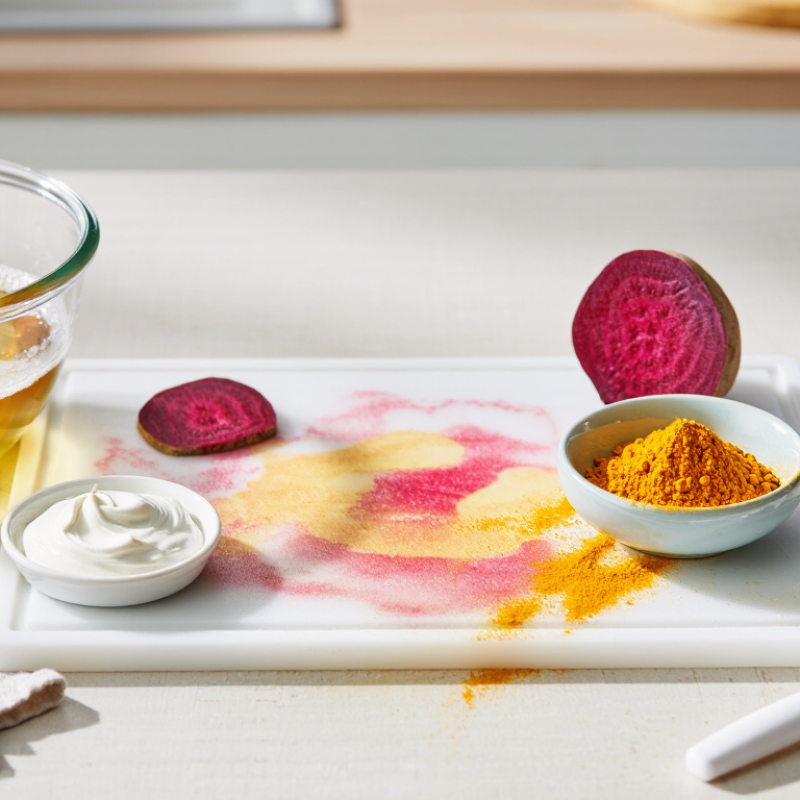
Beet and turmeric stains behave differently on white plastic. Beetroot’s red-violet color comes largely from betanin, a water-soluble betalain. Turmeric’s yellow-orange color comes mainly from curcumin, which dissolves poorly in water and is more compatible with oils. That difference helps explain why a beet mark may spread when wet, while turmeric can cling stubbornly to a food container.
Published pigment analyses report betanin’s strongest visible-light absorption near 538 nanometres; curcumin absorbs most strongly around 420–430 nanometres. These readings help identify the pigments, but they do not predict exactly how a household stain will look. Plastic type, surface wear, heat, and contact time all matter. A smooth, new surface may release pigment more easily than scratched plastic, where residue can lodge in tiny grooves. A stain’s appearance can mislead.
The color does not always mean the plastic has been permanently damaged. It may be pigment sitting in surface scratches, or pigment interacting with the material. Curcumin is especially persistent because water alone removes it poorly. Betanin can fade with exposure to light and heat, but fading is not the same as immediate removal. The pigment chemistry described by Herbach and colleagues in Food Science and Technology International (2006), and by Priyadarsini in Molecules (2014), gives useful context; actual results still vary with the plastic and stain. That uncertainty matters.
Check the care label and molded material code. Look for cracks, peeling, rough patches, or deep knife grooves.
No. It identifies material, but does not confirm stain resistance or heat tolerance.
Blot it promptly instead of rubbing. Then wash with dish soap and water.
Try a mild paste on a small, hidden area. Rinse it well, and stop if the surface changes.
Not necessarily. Wash it, then follow its care instructions for sanitizing. Persistent odor or deep grooves deserve attention.
No. Use heat only if the item’s care instructions allow it. A label matters.
Rinse containers and utensils soon after use. Don’t leave beet juice or turmeric dressing in a white bowl overnight.
Glass or stainless steel can help limit stains. Older plastic may discolor more easily, especially with heat or oily sauces.
Inspect the surface in bright light. Scratched plastic can hold pigment, and harsh scrubbing may make it rougher. I may be overcautious, but a pale patch could signal surface damage.
Beet and turmeric can leave strong red, orange, or yellow marks on white plastic because their pigments cling to the surface, especially when spills sit for a while or the plastic is scratched. Before cleaning, check the item’s care instructions and test any cleaning method on a small, hidden area. Avoid harsh abrasives or strong chemicals that could dull, scratch, or weaken the plastic.
For fresh stains, remove any residue promptly, rinse with cool water, and wash with mild dish soap and a soft cloth. If discoloration remains, use a gentle paste of baking soda and water, let it sit briefly, then wipe and rinse thoroughly. For stubborn marks, repeat mild treatments rather than scrubbing aggressively, and keep the plastic out of prolonged direct sunlight. To prevent future stains, rinse containers soon after use, avoid leaving pigmented foods inside for long periods, and consider using liners or serving dishes that are easier to clean. These careful steps explain how to get beet or turmeric stains out of white plastic while helping preserve its finish.

 ProChef Kitchen