5 Tips PP vs HDPE Cutting Boards Which Is Better?

Time:2026-10-16 Author:Ethan
0%

Choosing between PP and HDPE cutting boards can seem simple, until daily kitchen work exposes their differences. Both plastics are widely used because they resist moisture, clean easily, and offer dependable food-contact performance when properly manufactured. Yet material density, flexibility, surface texture, and heat tolerance can change the cutting experience. A board that feels stable under a chef’s knife may feel too rigid during heavy chopping. Another may bend slightly on a wet counter. Small details matter.

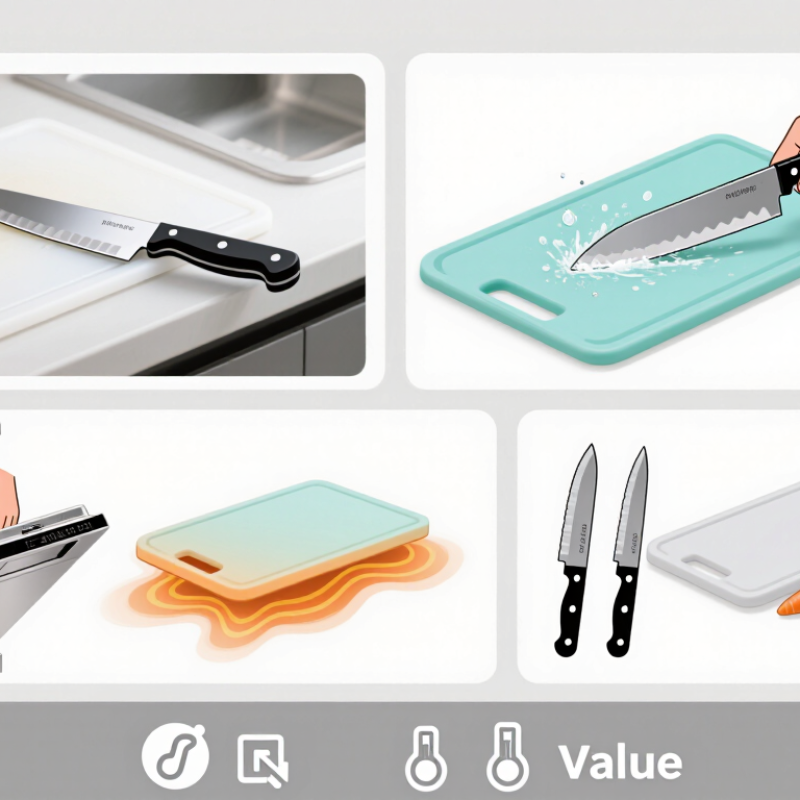
So, what is the difference between pp and hdpe cutting boards? This guide examines five practical points: durability, knife protection, cleaning, temperature resistance, and value. PP boards often feel firmer and may tolerate higher heat, depending on the grade and manufacturer’s instructions. HDPE boards commonly provide a softer cutting surface and strong impact resistance. Neither material is perfect. That matters. A thick board can still warp if stored beside intense heat, while a durable surface can develop grooves after months of hard use. Regular inspection remains important.

The comparison focuses on real kitchen decisions, not vague marketing claims. Expect details about slippery counters, visible knife marks, dishwasher cycles, and replacement costs. Product quality also varies between manufacturers, so resin type alone cannot guarantee performance. Look for clear specifications, food-contact documentation, and care instructions. A reliable choice should match your cutting volume, cleaning routine, knife preferences, and budget. Five focused tips can make that decision more practical. Small choices add up.
5 Tips PP vs HDPE Cutting Boards Which Is Better?

What Are PP and HDPE Cutting Boards?

Polypropylene (PP) and high-density polyethylene (HDPE) are common plastics used for kitchen cutting boards. Both are lightweight, nonporous, and easy to clean. They can be molded into thin, flexible boards or thicker professional-style surfaces. Still, they are not identical.

PP is generally firmer and more resistant to bending. Its harder surface can feel stable during slicing, especially with firm vegetables. HDPE often feels slightly softer and more forgiving under a knife. It is also known for good impact resistance and reliable performance in busy kitchens. Neither material is naturally knife-proof. Every cut can leave a mark.

In daily use, the difference may be smaller than expected. A thick PP board may outperform a thin HDPE board. Construction matters. Deep grooves can hold moisture and food particles, so inspect the surface regularly. Replace a board when cracks, heavy scoring, or rough edges become difficult to clean. Food-contact information should be clear, but labels alone do not guarantee perfect performance. Washing promptly with warm water and suitable detergent helps both materials last longer. Excessive heat can warp some boards, so avoid placing them near hot cookware. The “better” choice depends on thickness, knife feel, cleaning habits, and how often the board is used.

How PP and HDPE Cutting Boards Differ in Key Properties

PP and HDPE cutting boards differ mainly in density, hardness, flexibility, and heat behavior. Typical ASTM D792 data places PP density near 0.90–0.91 g/cm³, while HDPE usually measures about 0.94–0.97 g/cm³. That difference is visible in the hand: PP feels lighter, while HDPE feels denser and more stable on a damp counter. PP also generally has a higher melting range, around 160–170°C, compared with approximately 130–135°C for HDPE, according to polymer data compiled in industry technical databases.

HDPE usually offers a softer cutting surface. A sharp chef’s knife may leave shallow lines, but the board often feels less harsh during repeated chopping. PP tends to feel stiffer and may resist bending better in thin formats. In practical kitchen testing, that stiffness can improve control when slicing firm vegetables. However, excessive hardness is not automatically better. It may increase knife dulling, especially with forceful chopping.

Neither material is perfect. HDPE can warp if exposed to strong heat or uneven washing cycles. PP can feel slippery when wet, depending on its surface texture. Cleaning performance depends on design, not only resin type. The National Sanitation Foundation’s food-equipment guidance emphasizes cleanable, non-absorbent surfaces, while FDA food-contact requirements address material safety rather than knife comfort. I would choose HDPE for gentler daily cutting and PP for lighter, more rigid boards. Actual performance still depends on thickness, surface finish, and use habits.

How to Compare Their Safety, Durability, and Maintenance

5 Tips PP vs HDPE Cutting Boards: Which Is Better?

How to Compare Their Safety, Durability, and Maintenance

Safety starts with condition, not material alone. Tip 1: Choose a board with a stable, non-slip base. Both plastics are nonporous and easy to clean. Yet deep knife grooves can trap food residue. Tip 2: Replace any board with cracks, warping, or stubborn odors. A smooth surface matters most.

Tip 3: Compare cutting feel. HDPE usually feels denser and resists heavy chopping well. PP is often lighter and slightly more flexible. That flexibility can become a weakness if the board bends during use. A thick, well-supported PP board may still perform better than a thin HDPE board. Thickness changes the result.

Tip 4: Check heat and cleaning instructions carefully. Many PP boards tolerate dishwasher cycles better, but heat resistance varies by design. HDPE can also warp under high heat. Never place either board directly on a hot pan. Tip 5: Wash with hot water and dish soap after raw meat use. Dry it upright so air reaches both sides. Plastic boards do not need mineral oil. I used to judge boards by weight alone; that was a poor shortcut. Kitchen noise, storage space, and knife habits also matter. A board that slides or stays damp will create more problems, regardless of its plastic type.

PP vs HDPE Cutting Boards: Safety, Durability, and Maintenance

Comparative practical ratings based on typical material characteristics. A higher score indicates a stronger practical advantage.

Both polypropylene (PP) and high-density polyethylene (HDPE) are widely used for food-contact applications when properly manufactured and maintained. HDPE generally offers better impact resistance and lower moisture absorption, while PP typically provides higher heat resistance and better stiffness. Neither material is self-sanitizing, so regular washing, drying, and replacement after deep knife damage are important.

Which Cutting Board Performs Better for Different Kitchen Tasks?

Choosing between PP and HDPE depends on the kitchen task, not just the plastic label. Polypropylene usually has greater stiffness, with typical tensile strength around 25–40 MPa in ISO 527-based technical datasets. It stays flatter during chopping, making it useful for onions, herbs, and firm vegetables. HDPE commonly measures about 20–35 MPa, but it offers higher impact resistance and a softer cutting feel. That difference matters.

For raw meat, HDPE can be forgiving because its surface absorbs less knife shock. Its lower stiffness may also reduce slipping on some counters. However, repeated deep cuts can create grooves that hold residue. PP resists bending better, yet it may feel harsher under a sharp chef’s knife. In cold kitchens, some PP boards can become less tolerant of impact. Not always. Personal cutting pressure changes the result.

Both materials are generally nonporous. ASTM D570-based technical data commonly reports 24-hour water absorption below 0.1% for food-grade PP and HDPE. The FDA Food Code 2022 still requires food-contact surfaces to be smooth, durable, nonabsorbent, and easily cleanable. USDA FSIS consumer guidance recommends washing boards with hot, soapy water after use and separating raw-meat preparation from ready-to-eat foods. In practice, condition matters more than polymer preference. I would choose stiffer PP for fast vegetable prep and HDPE for meat work, then replace either board when knife grooves become difficult to clean.

How to Choose Between PP and HDPE Cutting Boards

Choosing between PP and HDPE cutting boards depends on your kitchen routine, not just price or color. Typical engineering data places HDPE density around 0.93–0.97 g/cm³, while PP is lighter, near 0.90–0.91 g/cm³. Material references using ASTM D792 and thermal testing show PP usually tolerates higher heat, often around 160–170°C. HDPE generally softens at lower temperatures, around 120–135°C. Heat matters during sanitation. It does not replace proper cleaning.

For frequent chopping, HDPE offers toughness and a slightly softer cutting feel. It may be kinder to knife edges, although board thickness and surface texture also matter. PP feels stiffer and resists heat better. I once focused too much on heat resistance and ignored grip. That was a poor choice. A rigid board can still slide on a wet countertop. Choose a textured underside or add a stable, washable mat.

The FDA Food Code 2022, Section 4-101.11, requires food-contact surfaces to be smooth, durable, and easily cleanable. It does not require PP or HDPE specifically. USDA FSIS guidance also advises replacing boards when deep grooves become difficult to clean. That detail is easy to miss.

For home kitchens, select HDPE for heavy daily chopping and PP where heat exposure is more demanding. Check the manufacturer’s cleaning limits, because recycled content, fillers, and molding quality can change performance. Material names alone are not enough.

FAQS

What are PP and HDPE cutting boards?

PP and HDPE are nonporous plastic materials used for kitchen cutting boards. Both are lightweight and easy to wash. Neither is knife-proof.

Which material feels harder during cutting?

PP usually feels firmer and resists bending better. It can feel stable when slicing firm vegetables. HDPE often feels softer under the knife.

Is HDPE gentler on knives?

HDPE may feel more forgiving during repeated chopping. A sharp knife can still leave shallow lines. Harder does not always mean better.

Which board is more stable on a damp counter?

HDPE feels denser and may stay steadier on a damp surface. A textured underside can improve grip. Design matters greatly.

Are thicker boards always better?

Not always. A thick PP board may perform better than a thin HDPE board. Thickness, texture, and construction can change daily performance.

How should PP and HDPE boards be cleaned?

Wash them promptly with warm water and suitable detergent. Scrub grooves carefully. Moisture and food particles can hide inside deep cuts.

Can heat damage these cutting boards?

Yes. Strong or uneven heat can warp either material, especially HDPE. Keep boards away from hot cookware. Do not test this carelessly.

When should a plastic cutting board be replaced?

Replace it when cracks, heavy scoring, or rough edges become difficult to clean. A few shallow marks may be manageable. Deep damage deserves attention.

Which material should a home kitchen choose?

Choose HDPE for a softer daily cutting feel. Choose PP for lighter, stiffer boards. I may overvalue material differences; thickness and habits often matter more.

Conclusion

PP and HDPE cutting boards are both practical plastic options for everyday food preparation, but their performance can differ in important ways. The key question, “what is the difference between pp and hdpe cutting boards,” comes down to material structure, flexibility, hardness, heat resistance, and surface feel. PP boards are generally lighter and may offer greater resistance to heat and chemicals, while HDPE boards are often denser, tougher, and better suited to heavy chopping. Both materials are nonporous, easy to clean, and less likely than wood to absorb moisture when properly maintained.

Choosing the right board depends on your kitchen tasks and priorities. HDPE is a strong choice for frequent cutting, firm ingredients, and long-term durability, while PP may be more convenient when low weight, flexibility, or higher heat tolerance is important. Regardless of material, use a stable board, clean it promptly, avoid deep grooves that are difficult to sanitize, and replace it when excessive wear appears. Comparing safety, durability, maintenance, and daily comfort will help you select the board that best fits your cooking habits.

Ethan

Ethan

Ethan is a seasoned marketing professional with a deep expertise in our company's innovative product line. With a passion for sharing knowledge and insights, he takes the lead in regularly updating our corporate blog, where he explores industry trends, product features, and effective marketing......