Choosing a cutting board seems simple until your countertop feels crowded, vegetables roll away, or raw chicken touches a salad area. The best size should support safe, comfortable preparation without overwhelming your kitchen. This matters in compact apartments, family homes, and professional cooking spaces alike.
Chef and food writer J. Kenji López-Alt offers a practical principle: “The bigger the cutting board, the better.” His point is useful, but it needs context. A large board gives onions, herbs, and meat more working space. It also reduces spills and keeps your knife strokes controlled. However, the biggest board is not always the best choice. It must fit your counter, sink, storage area, and daily habits.
Learning how to choose the right size cutting board for your kitchen starts with measuring real space. A 12-by-18-inch board suits many home cooks. Smaller boards can work for fruit, garnishes, or quick breakfast preparation. Larger boards help when chopping several vegetables or breaking down large ingredients. Leave a clear border around the board, so food does not fall onto the counter. Check its weight, thickness, cleaning needs, and resistance to warping. A board that cannot fit into your sink may become frustrating. I would not ignore that detail. It is easy to focus on surface area and forget everyday cleaning. There is no perfect size. The right board balances preparation space, hygiene, storage, and personal comfort. That balance deserves careful thought before purchase.
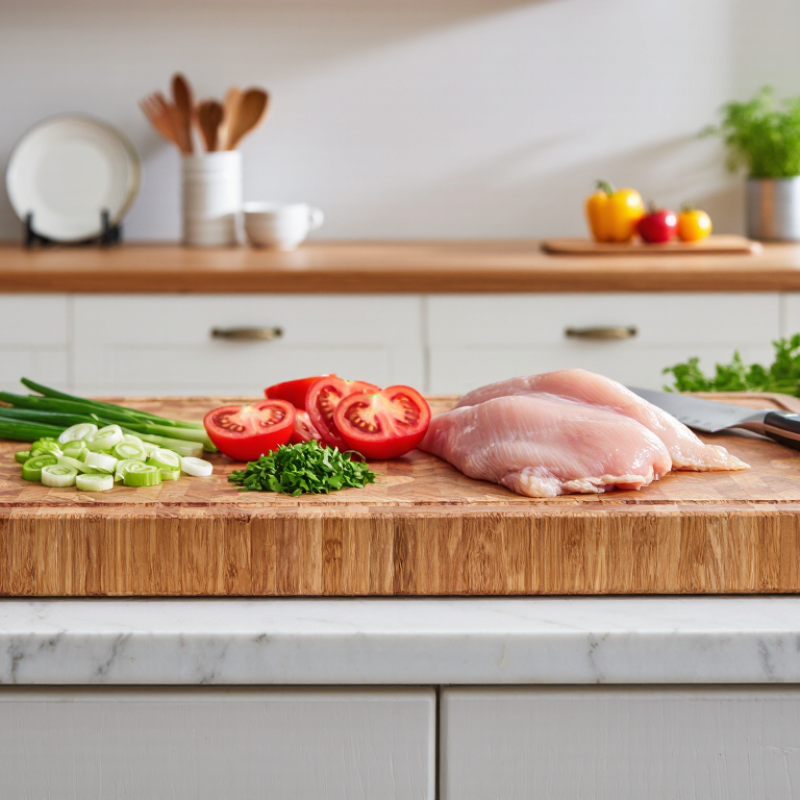
Cutting board size affects control, cleaning, storage, and daily cooking comfort. Standard dimensions vary, but common sizes include 12 x 16 inches, 18 x 24 inches, and 20 x 30 inches. Small boards suit fruit, herbs, and quick breakfast preparation. Medium boards handle most home cooking tasks. Large boards provide room for carving meat, rolling dough, or separating ingredients.
A practical medium board usually offers enough space without overwhelming the counter. Leave at least three inches around the board for safer hand movement. Measure your sink, cabinet, and storage shelf before buying. A board that fits the counter may still fail to fit upright in a cabinet. Thickness also matters. Boards around 0.75 to 1.5 inches often resist warping better, especially when made from solid wood.
I once chose a large board for serious meal preparation. It worked well for chopping vegetables, but cleaning it became annoying. That was my mistake. A heavier board can stay stable, yet it may be difficult to lift with wet hands. For apartments or smaller kitchens, a 12 x 18-inch board can be a more balanced choice. Check the usable cutting area, not only the outer dimensions. Handles, grooves, and rounded corners reduce working space. Measurements are not always perfectly consistent, so confirm the actual size before ordering.
The right cutting board size begins with your kitchen, not a product listing. Measure the clear countertop beside your sink and cooking area. Leave at least 10 centimeters around the board for safe hand movement. A 45-by-30-centimeter board suits many medium counters. Smaller kitchens may work better with a 35-by-25-centimeter board. Keep cabinet edges, burners, and appliance controls clear. Measure twice.
Storage capacity matters just as much. Check the shelf height, drawer depth, and cabinet opening before choosing a thick board. For upright storage, allow enough space to remove it without scraping nearby cookware. A board that fits tightly may become difficult to clean and dry. I once selected a large board for easier chopping, but storing it became frustrating. The measurement looked reasonable. The daily use was not.
Your cooking habits should refine the final choice. Frequent meal preparation needs enough surface for several ingredients without crowding. Occasional chopping may require a lighter, smaller board that lifts easily. A stable board should not slide when cutting firm vegetables. Place a damp cloth underneath if needed. For raw meat and ready-to-eat foods, separate washable boards can improve hygiene and reduce cross-contamination risks. Do not ignore cleaning space. The board should fit comfortably in your sink or washing area. Otherwise, its impressive size may create an inconvenient routine.
Compare common cutting-board footprints before buying. The surface area is calculated from each board’s stated length and width, helping you match prep space with available countertop and storage capacity.
Suitable for limited counters, light preparation, and narrow cabinets.
A balanced choice for routine chopping while preserving counter space.
Provides more working room but requires deeper counters and wider storage.
Best for large preparation tasks when countertop and cabinet clearance are available.
Before choosing a board, measure the clear countertop width and depth, then check the storage opening. Leave enough surrounding space for safe handling and cleaning.
How to Choose the Right Cutting Board Size
The best cutting board size depends on your ingredients and preparation habits. A 12-by-16-inch board suits daily tasks, such as slicing vegetables, fruit, or boneless meat. It gives food enough room without crowding the counter. Smaller boards, around 8-by-10 inches, work well for lemons, herbs, garlic, and quick garnishes. However, they can feel unsafe when cutting large onions or slippery food.
For a whole chicken, cabbage, melon, or several potatoes, choose a board at least 18-by-24 inches. Extra space helps keep ingredients on the surface instead of falling onto the counter. A stable board should also leave room for your knife hand and a small pile of prepared food. In my kitchen, I once chose a large board for every task. It was sturdy, but washing and storing it became inconvenient. Bigger is not always better.
Tips: Match the board to the largest ingredient you prepare often. Leave a few inches around the food for safer knife movement. Use separate boards for raw meat and ready-to-eat foods, then clean them thoroughly after use. If your board slides, place a damp cloth underneath it. Check the surface regularly. Deep grooves can hold moisture and food particles, so replacement may be wiser than continued use.
| Preparation Task | Typical Ingredients | Recommended Board Size | Why This Size Works | Useful Features |
|---|---|---|---|---|
| Small everyday preparation | Garlic, herbs, lemons, berries, small portions of vegetables | 30 × 20 cm (12 × 8 in) |
Fits limited counter space and is easy to lift, wash, and store. | Lightweight construction; non-slip feet or a stable base |
| Routine vegetable chopping | Onions, carrots, celery, peppers, potatoes | 40 × 30 cm (16 × 12 in) |
Provides enough room for safe knife movement and a moderate pile of prepared food. | Reversible surface; rounded edges; moderate thickness |
| Preparing leafy greens and large vegetables | Lettuce, cabbage, broccoli, squash, eggplant | 45 × 30 cm (18 × 12 in) |
Accommodates bulky ingredients before and after trimming or cutting. | Juice groove for moist produce; broad working area |
| Cutting bread and pastries | Baguettes, sandwich loaves, cakes, pastries | 45 × 35 cm (18 × 14 in) |
Allows the loaf to be positioned comfortably and leaves space for crumbs. | Crumb-catching design; smooth surface; easy-to-clean construction |
| Slicing cooked meat or poultry | Roast chicken, turkey breast, cooked beef, ham | 45 × 30 cm (18 × 12 in) |
Supports long slicing strokes and provides room to collect juices and slices. | Deep juice groove; stable feet; durable, knife-friendly surface |
| Raw meat and poultry preparation | Chicken portions, beef steaks, pork cuts | 40 × 30 cm (16 × 12 in) |
Offers a contained work area while remaining manageable for thorough cleaning. | Non-porous or easily washable surface; deep perimeter groove; dedicated use recommended |
| Filleting fish or preparing seafood | Whole fish fillets, shrimp, squid, shellfish | 45 × 30 cm (18 × 12 in) |
Provides length for fillets and room to control slippery ingredients safely. | Stable base; easy-rinse surface; moisture-control groove |
| Large-batch meal preparation | Multiple vegetables, herbs, meat portions, meal-prep ingredients | 50 × 35 cm (20 × 14 in) |
Maximizes usable workspace and reduces the need to transfer ingredients repeatedly. | Extra-thick build; strong stability; sufficient storage clearance |
| Professional or high-volume preparation | Large vegetables, whole poultry, multiple cuts of meat, bulk ingredients | 60 × 40 cm (24 × 16 in) |
Creates a generous work zone for repetitive preparation, but requires a deep counter and careful handling. | Heavy-duty stability; reinforced construction; dedicated cleaning and storage area |
Comparing Materials, Thickness, Weight, and Ease of Handling
Size should match your counter, cooking habits, and storage space. Measure the work area before buying a board. Leave room for a knife, bowl, and your moving hands. Wood feels gentle under a sharp knife and often resists sliding. Plastic is usually lighter and easier to clean after cutting meat or vegetables. Composite materials can balance durability and moderate weight. Each material behaves differently.
Thickness changes stability more than many shoppers expect. A board around 18 to 25 millimeters feels steady for daily chopping. Thicker boards reduce flexing, but they also occupy more storage space.
Heavier boards stay planted during firm cuts. That strength becomes inconvenient when lifting the board with wet hands. Weight matters most for older users or smaller kitchens. A lightweight board can be practical, not cheap.
Ease of handling deserves a real kitchen test. Rounded edges feel better when carrying a full board. Built-in grips may help, but deep grooves can collect food residue. During my own testing, I chose a large, thick board and underestimated its weight. It performed well, yet I avoided moving it often. That was a poor practical choice. A board should fit both the meal and the person using it. Keep balance in mind.
The right cutting board should match your ingredients, counter space, and cooking habits. A 30 × 20 cm board suits fruit, herbs, and small meals. A 40 × 30 cm board gives more room for onions, meat, and daily preparation. For large vegetables or family cooking, choose a board at least 45 cm wide. Your knife should move freely without touching the counter. That simple detail is often missed.
Food safety also affects size choices. The CDC estimates that foodborne illnesses cause about 48 million illnesses and 128,000 hospitalizations yearly in the United States. The USDA Food Safety and Inspection Service recommends separating boards for raw meat and ready-to-eat foods. Two medium boards may be safer and more practical than one oversized board. A very large board can be awkward to wash, especially in a small sink. I have found that convenience sometimes beats maximum surface area.
Tips: Measure your sink first. Leave a few centimeters around the board for safe handling. Use one board for produce and another for raw proteins. Replace boards with deep grooves or cracks. A board that looks attractive may still be too heavy for daily use. Check the real routine, not the imagined one.
A 12-by-16-inch board suits vegetables, fruit, and boneless meat. It offers space without crowding the counter.
An 8-by-10-inch board works for lemons, herbs, garlic, and quick garnishes. It may feel cramped with large onions.
Choose at least 18-by-24 inches for whole poultry, cabbage, melons, or several potatoes. Extra space prevents food from falling.
Leave a few inches around the food. Your knife hand needs clear room. This detail is easy to miss.
Measure the counter and sink before buying. Leave room for a bowl, knife, and moving hands.
Yes. Boards around 18 to 25 millimeters usually feel steady. Thicker boards flex less but need more storage space.
No. Heavy boards stay planted during firm cuts, but wet hands may struggle to lift them. Practical weight matters.
Use separate boards for raw meat and ready-to-eat foods. Clean them thoroughly after use. Two medium boards may work better.
Replace boards with deep grooves or cracks. Moisture and food particles can remain inside. Appearance alone is not enough.
Place a damp cloth underneath it. Test the board before cutting slippery food. It is a small fix, but not perfect.
Choosing the right cutting board size begins with understanding how dimensions affect preparation, storage, and daily comfort. Small boards are convenient for quick tasks and limited counters, while medium boards offer a practical balance for most kitchens. Large boards provide more workspace for chopping vegetables, preparing meat, or handling multiple ingredients, but they require sufficient counter and storage space. When considering how to choose the right size cutting board for your kitchen, measure your countertop, sink area, cabinets, and available storage before making a decision.
Your cooking habits should also guide your choice. Match the board size to the ingredients and tasks you perform most often, and consider material, thickness, weight, stability, and ease of cleaning. A thicker, heavier board may provide better durability and steadiness, while a lighter board is easier to move and store. The ideal cutting board is large enough to work comfortably without overwhelming your kitchen, making food preparation safer, more efficient, and more enjoyable.

ProChef Kitchen