Plastic composite boards are widely used for decks, balconies, garden paths, and outdoor seating. Across China, heat, humidity, rain, coastal air, and winter frost can affect how a surface looks and performs. Care differs by product, so the board maker’s care guide should remain your first reference. A routine that works in a dry inland yard may not suit a shaded, damp balcony. Small details matter.
This guide introduces ten practical habits: sweeping grit, rinsing spills, using mild soap, and clearing gaps between boards. It also explains how to handle stains, avoid abrasive tools, inspect fasteners, and respond to algae or persistent moisture. For many composite products, routine cleaning needs water and a soft brush rather than oil or harsh solvents. Still, “composite” describes many formulations, not one identical material. Check a hidden area before using any cleaner.
The phrase how to oil or maintain a plastic composite board deserves careful treatment, because many capped or polymer-rich boards do not need oil. Applying oil without product approval can leave residue, attract dirt, or change the surface’s appearance. The safest choice is to confirm the product type and follow written manufacturer instructions. We’ll focus on observable steps: what to clean, how gently to clean it, and when to seek product-specific advice. Test first. No maintenance plan is perfect; missed debris or stubborn marks may need a second look. These tips offer a starting point, not a substitute for the board’s own care requirements.
Plastic composite boards combine wood fibers with thermoplastic, so they resist some moisture-related problems but are not maintenance-free. Capped boards have a protective outer layer; uncapped boards may absorb more moisture and show stains differently. The USDA Forest Products Laboratory’s Wood Handbook places wood’s fiber-saturation point near 30% moisture content. That figure describes wood, not composite boards, but it helps explain why exposed fibers and cut edges still deserve attention.
Dust, pollen, and damp leaves can collect in board grooves, especially beneath planters or along shaded edges. Sweep regularly, then wash with mild soap and water using a soft brush. Rinse well. A Wood Handbook reference point—about 12% equilibrium moisture content at 70°F and 65% relative humidity—also shows how strongly wood responds to its surroundings; composite formulations respond differently, so local conditions matter. There is no single cleaning schedule that fits every site.
Check gaps, fasteners, and cut ends after seasonal temperature changes. Boards can expand or contract, and trapped debris can hold moisture against the surface. ASTM D7032 sets performance evaluation requirements for composite decking and guard systems, but it does not replace the care instructions for a specific board type. Be cautious with pressure washing: excessive pressure may roughen surfaces or drive water into joints. Even careful cleaning can miss shaded buildup.
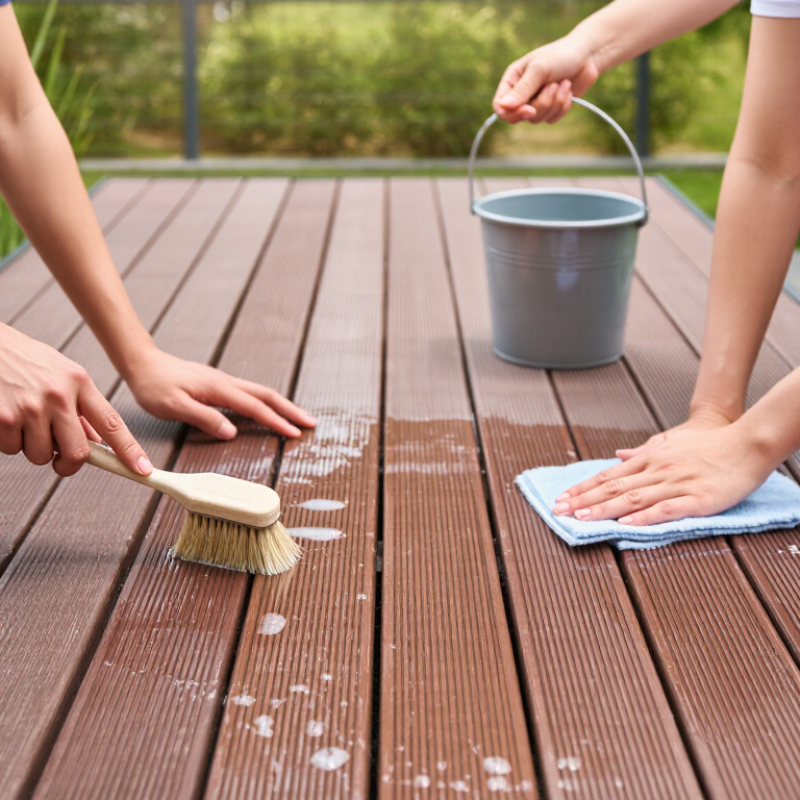
Plastic composite boards collect dust, pollen, and food spills in their surface texture. Start with a soft-bristle brush, a bucket of warm water, and a little mild dish soap. Sweep loose grit away before washing; otherwise, it can scratch the surface as you scrub. Keep it gentle.
Work in small sections and brush along the board’s grain or embossed pattern. A microfiber cloth can lift marks around railings and board edges. Avoid abrasive pads, stiff wire brushes, and harsh solvent cleaners, which may dull or stain some finishes. Rinse well. Soap left in grooves can dry into a film, especially on sunny days.
For sticky spots, let soapy water sit briefly, then brush again rather than scraping with a metal tool. Use a garden hose for rinsing. Pressure washers can damage some composite surfaces, so check the board maker’s care instructions before using one; if permitted, keep the pressure low and the nozzle moving. I would not assume every board reacts alike. Test an unfamiliar cleaner on a hidden area, and stop if the color or sheen changes. A few minutes of gentle cleaning usually beats one aggressive pass.
Plastic composite boards resist everyday wear, but their surfaces can still scratch and stain. Sweep away grit regularly; sand and small stones can act like sandpaper under shoes or furniture. Use a soft-bristled brush and mild soap with water for routine cleaning. Rinse well, then let the surface dry. Avoid wire brushes and harsh scouring pads, which may leave marks that are difficult to remove.
Spills need prompt attention. Blot oil, food, or drink with a clean cloth instead of rubbing it across the boards. For stubborn spots, test a mild cleaner on a hidden area first and follow the board maker’s care instructions. Small habits matter. Place protective pads beneath chair legs, and lift heavy planters rather than dragging them. A mat near an entry can catch grit, though trapped moisture beneath it may cause trouble.
Keep leaves and debris from collecting between boards, where damp patches can linger. Check drainage after rain, especially around shaded corners. Do not assume composite material is waterproof; standing water and persistent moisture can still affect its appearance. I’d be cautious with pressure washers: excessive pressure or a close nozzle can roughen the surface. Sometimes a gentle wash takes longer, but it is safer. A little inconsistency is normal; inspect the boards and adjust cleaning to their condition.
China Top 10 Tips to Maintain Plastic Composite Boards: Managing Mold, Mildew, and Stubborn Marks
Moisture and trapped leaves can leave dark patches on composite boards, especially between planks or beneath planters. Brush away debris regularly so damp material does not sit against the surface. For light mildew-like marks, wash with warm water and mild soap, then use a soft-bristled brush along the board’s grain. Rinse well and let the area dry. Better airflow helps. I’ve found that shaded corners often need more attention, though every deck behaves a little differently.
Tip: For stubborn marks, clean a small hidden spot first. Use a non-abrasive brush and gentle pressure; repeat rather than scrubbing hard. Avoid metal brushes, harsh solvents, and aggressive pressure washing, which may scratch or damage the surface. Check the board maker’s care instructions before trying a specialist cleaner, since finishes vary. If a mark remains, pause and reassess instead of reaching for a stronger chemical. That extra patience can save the surface.
| No. | Maintenance Tip | Recommended Method | When to Do It | Important Caution |
|---|---|---|---|---|
| 1 | Remove everyday dirt promptly | Sweep away leaves and loose debris, then wash the surface with water and a mild household detergent using a soft-bristle brush. | Weekly, or when debris accumulates | Rinse thoroughly so detergent and loosened dirt do not remain on the boards. |
| 2 | Clean mold and mildew growth | Apply mild soapy water, gently scrub the affected area, and rinse well. Allow the boards to dry fully. | As soon as growth appears | Do not mix cleaning products. Check the board care instructions before using any mold remover or bleach-based product. |
| 3 | Reduce conditions that encourage mildew | Clear wet leaves, soil, and other organic matter; keep gaps and drainage paths free of debris to promote airflow and drying. | During routine inspections, especially in damp seasons | Avoid piling stored items or planters directly over areas that need to dry. |
| 4 | Treat food and grease marks | Blot excess residue, then clean with warm water, mild detergent, and a soft brush. Rinse after cleaning. | As soon as practical after a spill | Avoid abrasive scouring pads, which may scratch or change the surface appearance. |
| 5 | Lift mud and tracked-in dirt | Let heavy mud dry enough to remove without spreading it, sweep it away, then wash remaining residue with mild soapy water. | After muddy weather or heavy foot traffic | Use a soft brush rather than a metal scraper or stiff wire brush. |
| 6 | Address water rings and light surface marks | Wash with water and a small amount of mild detergent, brushing gently in the direction of the board grain where applicable. | When marks become visible | Test the cleaning method on a small, inconspicuous area first. |
| 7 | Use pressure washing cautiously | Prefer a garden hose and soft brush. Use a pressure washer only if the board maker’s care instructions allow it, following the specified pressure and nozzle distance. | Only when ordinary washing is insufficient | Excessive pressure or a concentrated jet can damage the surface or leave visible marks. |
| 8 | Prevent scratches during snow removal | Use a plastic shovel and move snow carefully. Remove packed snow without digging the shovel edge into the boards. | During winter snow clearance | Avoid metal-edged tools and check care instructions before applying de-icing products. |
| 9 | Keep board gaps and drainage areas clear | Remove leaves, dirt, and other obstructions from gaps and around the deck perimeter so water can drain away. | Seasonally and after storms | Do not alter board spacing or drainage details without checking the installation guidance. |
| 10 | Choose cleaners carefully | Start with water and mild detergent. For a stubborn mark, consult the board care instructions and test any approved cleaner in a hidden spot. | Before treating persistent stains | Avoid unapproved solvents, harsh chemicals, and abrasive cleaners; they may discolor or damage some composite surfaces. |
China Top 10 Tips to Maintain Plastic Composite Boards
Plastic-composite boards can expand, fade, or collect grime as weather and use change. Inspect them every few months, and after heavy rain or extreme heat. Look for raised edges, loose fasteners, deep scratches, and patches that stay damp. Small signs matter. Check beneath planters and outdoor furniture, where trapped moisture can encourage staining or surface growth. Clear leaves from gaps so water can drain freely.
Care depends on location. In humid southern areas, rinse away mud and pollen, then check shaded corners for lingering dampness. After storms, look for blocked drainage and boards that have shifted. In northern regions, temperature swings can make movement more noticeable; keep an eye on joints and edges. Coastal air may leave salt deposits, so a gentle freshwater rinse can help. Avoid aggressive scrubbing.
Use a soft brush and mild soapy water, following the board maker’s care instructions. Test any cleaner on a hidden spot first. A shaded deck may need less frequent washing than a sunny one, but it still needs inspection. One routine will not fit every home. Keep simple dated notes or photos; they can reveal gradual changes that are easy to miss during daily use.
Use warm water, a little mild dish soap, and a soft-bristle brush. Sweep away grit first. Keep it gentle.
Work in small sections and brush along the grain or embossed pattern. A microfiber cloth can reach edges and railings.
Let soapy water sit briefly, then brush again. Avoid scraping with metal tools; they may scratch the surface.
Wash with warm, soapy water and a soft brush. Rinse well, then let the area dry. Better airflow may help.
Regularly brush away leaves and other debris, especially between boards and beneath planters. Damp material can leave marks.
It may damage some surfaces. Check the care instructions first; if allowed, use low pressure and keep the nozzle moving. I wouldn’t assume every board reacts alike.
Test a suitable cleaner on a hidden spot first. Repeat gentle brushing rather than scrubbing hard. Stop if the color or sheen changes.
Plastic composite boards are designed to be durable, but regular care helps preserve their appearance and extend their service life. Sweep away leaves and loose dirt, then clean the surface with water, a soft brush, and a mild detergent. Avoid abrasive pads, harsh chemicals, and high-pressure cleaning that could mark or damage the boards. To prevent scratches and stains, use protective pads beneath furniture, wipe up spills promptly, and avoid dragging heavy objects across the surface. Since composite boards generally do not need oil like natural wood, check the product’s care guidance before applying any coating; understanding how to oil or maintain a plastic composite board starts with choosing care methods suitable for its material.
For mold, mildew, or stubborn marks, remove debris first and clean gently with an appropriate household cleaner, testing it on a discreet area. Rinse away residue and allow the boards to dry. Inspect them regularly for surface wear, loose fittings, blocked drainage, or persistent moisture. In China’s varied climate, adapt your routine to local conditions: remove standing water after heavy rain, clean dust more often in dry or urban areas, and pay attention to shade and airflow in humid regions. Prompt, gentle maintenance can help keep boards tidy without unnecessary damage.

ProChef Kitchen