Are Stainless Steel Cutting Boards Bad for Knives?

Time:2026-10-22 Author:Ethan
0%

Are stainless steel cutting boards bad for knives? The answer depends on how you cut, what you cut, and how often you use the board. Stainless steel feels clean, solid, and easy to sanitize. It does not absorb juices or hold lingering food odors. However, its hard surface gives a knife blade very little cushioning during each cut.

The question “are stainless steel surface boards bad for knife blades” deserves a careful answer. In practical kitchen use, repeated contact with steel can dull an edge faster than softer wood or quality plastic. This is especially noticeable with thin Japanese blades, brittle high-carbon steel, or knives sharpened to narrow angles. A heavy chopping motion may also create tiny chips along the edge. You may not see them immediately.

Cutting technique matters.

A controlled slicing motion usually causes less stress than forceful chopping. The board’s construction matters, too. Some stainless boards have a flexible core, textured areas, or a silicone layer that reduces impact. Others feel like a rigid metal sheet over stone. They are not equal.

I have used stainless surfaces for messy preparation, and their cleanup is genuinely convenient. Still, convenience can hide a cost. A knife may seem sharp after washing, then struggle with tomatoes a week later. Professional sharpening advice generally favors wood or resilient plastic for routine knife work. Stainless steel can remain useful for dough, seafood, or high-moisture tasks, but it should not automatically replace a knife-friendly cutting board. The evidence is practical rather than absolute, and personal cutting habits can change the result.
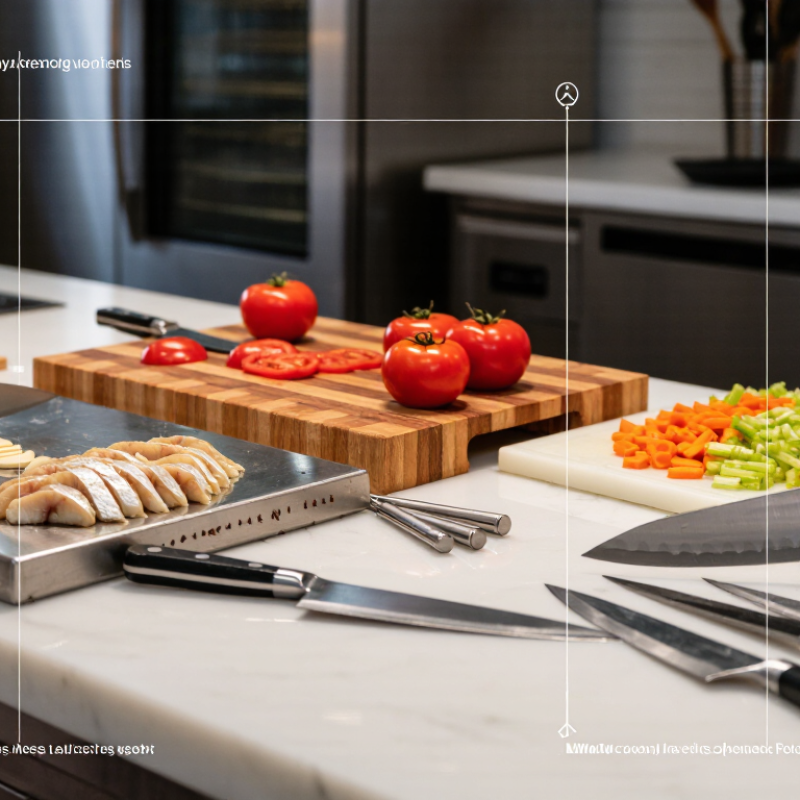
Are Stainless Steel Cutting Boards Bad for Knives?

Define Stainless Steel Boards by Grade, Hardness, and Surface Finish

Are Stainless Steel Cutting Boards Bad for Knives?

Define Stainless Steel Boards by Grade, Hardness, and Surface Finish

Stainless steel boards are not automatically harmful to every knife. Their effect depends on grade, hardness, and surface texture. In practical kitchen use, a rigid metal surface gives the blade no cushioning. Repeated chopping can roll or dull a fine edge faster than a wooden or resilient polymer board.

Grade alone does not determine performance. Common food-contact stainless steels, such as 304 and 316, resist corrosion well, but their hardness may remain moderate when supplied in an annealed condition. A harder alloy is not always a better cutting surface. Board thickness and manufacturing treatment also matter. My first assumption was too simple.

Surface finish often creates the clearest difference. A smooth, polished surface produces less drag and leaves fewer abrasive points against the edge. Brushed or heavily textured finishes can hold tiny particles, create uneven contact, and increase wear during slicing. Scratches may also collect residue if cleaning is rushed. That detail is easy to overlook.

Knife geometry matters, too. Thin, highly sharpened edges usually show damage sooner than thick utility blades. A stainless board may suit brief prep tasks, but it is unforgiving during forceful chopping. If you use one, keep the knife angle consistent and avoid twisting the blade against the surface. I still would not treat “food-safe” as “knife-safe.” Those terms describe different concerns.

Compare Board Hardness: 304/316 Stainless Steel at ≤201–217 HB

Are Stainless Steel Cutting Boards Bad for Knives?

Compare Board Hardness: 304/316 Stainless Steel at ≤201–217 HB

A stainless steel board can damage a knife, even when its surface looks smooth and clean. The key issue is repeated impact, not appearance. A board made from 304 or 316 stainless steel may be listed at no higher than about 201–217 HB, using the Brinell hardness scale. That figure describes the board material, not its cutting performance. Hardness also changes with annealing, polishing, and cold working.

That is the catch.

During chopping, the knife edge contacts a rigid surface with little cushioning. The edge can roll, flatten, or develop tiny chips. A sharp, thin edge usually shows damage sooner than a thicker utility blade. The board may not visibly scratch, yet the knife can feel dull after only a few sessions. In practical kitchen comparisons, wood and quality plastic usually reduce impact because they yield slightly under the blade.

A ≤201–217 HB stainless surface is not automatically disastrous. Blade steel hardness, edge angle, and cutting force matter too. A thick, softer-edged knife may tolerate it better. However, even a modestly hard stainless board can create harsh feedback and noisy contact. It also encourages sliding cuts, which may reduce control. I would treat the stated HB value as a warning, not a guarantee of safety. Material certificates can be useful, but they do not measure edge retention in daily cooking.

Are Stainless Steel Cutting Boards Bad for Knives? — Comparing Board Hardness: 304/316 Stainless Steel at ≤201–217 HB
Board or Blade Material Hardness Scale Representative Hardness Data Relative Hardness and Contact Behavior Expected Effect on a Knife Edge Practical Assessment
304 Stainless Steel Brinell Hardness (HB) Up to approximately 201 HB for annealed product under commonly specified limits Rigid, non-yielding metal surface; harder and less forgiving than typical plastic or wood cutting surfaces High risk of edge rolling, accelerated dulling, or chipping on harder/brittle knife edges Not recommended as a primary cutting surface for maintaining a sharp knife
316 Stainless Steel Brinell Hardness (HB) Up to approximately 217 HB for annealed product under commonly specified limits Similarly rigid to 304 stainless steel; the small nominal hardness difference does not make it knife-friendly High risk of edge damage during repeated direct contact Not recommended for routine chopping or slicing with quality knives
High-Density Polyethylene (HDPE) Shore D Commonly around Shore D 60–70, depending on grade and formulation More compliant than metal and able to absorb some cutting impact; hardness scales are not directly convertible to HB Generally low risk of rolling or chipping a knife edge A practical knife-friendly option when properly cleaned and replaced when heavily scored
Polypropylene (PP) Shore D Commonly around Shore D 60–75, depending on grade Moderately rigid but still more forgiving than stainless steel; direct comparison with HB is not valid Usually gentle on knife edges during normal food preparation Suitable for routine cutting when the surface remains stable and free from deep grooves
Hard Maple or Similar Hardwood Janka hardness Approximately 1,000–1,500 lbf for many common hardwood cutting-board species Firm but slightly resilient; wood hardness uses a different test from Brinell hardness Usually provides a favorable balance between support and edge protection Generally suitable for knives when kept clean, dry, and properly maintained
Tempered Knife Blade Steel Rockwell C (HRC) Many kitchen knife blades are approximately 55–62 HRC; exact hardness varies by steel and heat treatment Harder than common cutting-board materials in terms of edge retention, but the very thin edge is mechanically vulnerable A hard board can roll, chip, or rapidly blunt the edge even when the blade body is harder Blade hardness alone does not make a stainless-steel board safe for cutting
Glass or Ceramic Board Material-specific scales Typically very rigid and non-yielding; hardness varies significantly by composition Little impact absorption and high resistance to indentation; hardness values are not directly comparable with HB High risk of rapid dulling and possible edge chipping Best reserved for serving or display rather than direct knife work

Important interpretation: The listed 304 and 316 stainless-steel values are nominal upper limits commonly specified for annealed stainless-steel products, not universal values for every surface or finished component. Brinell, Shore D, Janka, and Rockwell C measurements use different test methods and should not be converted directly without an appropriate standard. Knife-edge damage is influenced by board rigidity, impact angle, blade geometry, steel microstructure, and cutting technique—not hardness alone.

Assess Knife Edge Damage at Typical 55–60 HRC Hardness

Are Stainless Steel Cutting Boards Bad for Knives?

Assess Knife Edge Damage at Typical 55–60 HRC Hardness

At 55–60 HRC, a kitchen knife has a hard, wear-resistant edge, but hardness does not make it impact-proof. Stainless steel boards may be softer on a hardness scale, yet they offer almost no cushioning. The blade meets a rigid surface instead of yielding material. It feels unforgiving. During chopping, the edge can roll sideways, form tiny chips, or lose alignment before damage becomes visible. Thin, acute edges are especially vulnerable.

I initially blamed hardness alone. That explanation was too simple. Edge angle, cutting force, blade thickness, and the board’s surface finish also matter. A polished steel surface can reduce friction, but it still transfers impact directly into the edge. Repeated contact may leave a dull strip near the bevel, even when the blade looks intact.

A practical check needs little equipment. Slice a ripe tomato before and after several cuts on the board, then inspect the edge under strong light. Drag a fingernail gently across the bevel; a raised burr may indicate rolled steel. Paper testing can reveal uneven cutting, although it is not a laboratory measurement. I would not call every stainless board disastrous, because careful slicing causes less stress than forceful chopping. Still, for a 55–60 HRC knife, wood or quality polymer usually provides a more forgiving working surface. The difference becomes obvious when the edge is thin.

Examine Cutting Force, Edge Angles, and Repeated Impact Effects

Are Stainless Steel Cutting Boards Bad for Knives?

A stainless steel cutting board offers almost no cushioning under a knife. During chopping, the cutting force travels directly from the blade into the hard surface. This can make each stroke feel crisp, but it also increases stress at the edge. A thin, acute edge angle may slice beautifully through tomatoes, yet it has less metal supporting its apex. Contact with steel can roll that edge or create tiny chips, especially during forceful chopping.

Repeated impact matters more than one accidental tap. Imagine cutting carrots on a rigid surface for several minutes. Each strike adds another small shock to the same narrow line of steel. Softer food reduces the problem, while bones, seeds, and frozen ingredients increase it sharply. Knife hardness, edge geometry, and technique also change the result. My first assumption was that every knife would suffer equally. That is too simple. Some robust blades tolerate occasional contact, but none benefit from it.

Tips: Use a wood or quality polymer board for regular prep. Keep the knife angle steady and avoid twisting during cuts. If you prefer stainless steel, reserve it for brief tasks and use lighter pressure. Check the edge under bright light. A shiny, uneven reflection can reveal rolling before your fingers notice it. Sharpening may restore performance, but repeated damage can gradually remove more metal than expected.

Are Stainless Steel Cutting Boards Bad for Knives?

Geometric wedge-force factor at different included edge angles

The geometric factor is calculated as 1 ÷ sin(half of the included edge angle), normalized to a 60° edge. A thinner edge angle can reduce slicing resistance but leaves less steel behind the apex. Stainless steel boards are rigid and non-yielding, so repeated impacts can transmit more shock to a fine edge than softer wood or plastic surfaces. Actual cutting force also depends on sharpness, blade steel, food texture, and applied pressure.

Evaluate Safer Alternatives Using Industry Hygiene and Wear Standards

Are Stainless Steel Cutting Boards Bad for Knives?

Evaluate Safer Alternatives Using Industry Hygiene and Wear Standards

Stainless steel is smooth, nonporous, and easy to sanitize. These qualities support commercial hygiene requirements. However, its hard surface gives a knife edge little protection. Repeated chopping can roll the edge, create tiny chips, and make sharpening more frequent. You may notice dullness first on tomatoes or soft herbs.

Hardness matters.

A safer choice is a food-grade plastic board made from high-density polyethylene or polypropylene. These materials provide a slightly forgiving surface while remaining nonporous and washable. Choose a board that stays stable, resists deep scoring, and can tolerate the cleaning process used in your kitchen. A deeply grooved board is difficult to clean, even if its material is technically hygienic.

Wood can also protect knife edges, especially end-grain wood. Yet it needs careful drying and regular inspection. Cracks, loose joints, and persistent odors are warning signs. Do not assume every wooden board is equally safe. Moisture control matters more than appearance.

In professional kitchens, hygiene depends on cleanability, separation, and maintenance. Use separate boards for raw proteins and ready-to-eat foods. Replace any board with cuts that trap residue. This is where advice becomes less perfect: a plastic board may be safer for sanitation, but a poorly maintained one can still fail. A stainless board may clean easily, yet it can shorten the useful life of a carefully sharpened knife.

FAQS

Are stainless steel cutting boards automatically bad for knives?

No. Their effect depends on edge geometry, cutting force, hardness, thickness, and surface finish. Rigid steel provides almost no cushioning. Forceful chopping may roll or chip a fine edge.

Does stainless steel grade determine knife safety?

Not by itself. Food-contact grades can resist corrosion while remaining moderately hard. Board thickness and manufacturing treatment also matter. My earlier assumption was too simple.

How does surface finish affect knife wear?

A polished surface usually creates less drag and fewer abrasive contact points. Brushed or heavily textured finishes may trap particles and increase wear. Scratches can hold residue.

What can happen to a 55–60 HRC knife?

The edge can lose alignment despite its hardness. Repeated impacts may create a rolled edge, tiny chips, or a dull strip near the bevel. Hardness is not impact-proof.

Which cutting actions create the most damage?

Forceful chopping and twisting the blade against the board create greater stress. Careful slicing is gentler. Steel still feels unforgiving.

How can I check whether the edge suffered damage?

Slice a ripe tomato before and after using the board. Inspect the edge under strong light. A raised burr may indicate rolled steel. The paper test can show uneven cutting, but it is not laboratory proof.

What surfaces are usually gentler on knife edges?

Food-grade plastic boards offer slight flexibility and simple cleaning. End-grain wood can also reduce impact. Choose stable boards without deep grooves. Material alone is not everything.

How should hygiene affect board selection?

Separate boards for raw proteins and ready-to-eat foods. Replace boards with cuts that trap residue. Dry wooden boards carefully. Stainless steel cleans easily, but it may shorten knife life.

Conclusion

Stainless steel cutting boards are durable, nonporous, and easy to sanitize, but their effect on knives depends on grade, hardness, and surface finish. Common 304 and 316 stainless steel typically measure around 201–217 HB, while many kitchen knives measure approximately 55–60 HRC, making the board substantially harder than the knife’s edge. A smooth, polished surface may reduce sliding resistance, but it cannot eliminate the stress created when a thin edge contacts metal.

The key question is: are stainless steel surface boards bad for knife blades? In regular use, repeated chopping, high cutting force, steep or narrow edge angles, and impact against the board can accelerate edge rolling, micro-chipping, and dulling. The damage may be more noticeable with harder, thinner blades or aggressive cutting techniques. For safer performance, softer polymer, rubber, or end-grain wood surfaces generally provide better impact absorption while still meeting practical hygiene and wear expectations when properly cleaned, maintained, and replaced as needed.

Ethan

Ethan

Ethan is a seasoned marketing professional with a deep expertise in our company's innovative product line. With a passion for sharing knowledge and insights, he takes the lead in regularly updating our corporate blog, where he explores industry trends, product features, and effective marketing......