Cross-contamination can turn a clean kitchen into a quiet food-safety risk. Raw chicken juice may reach lettuce through one damp cutting board. A single careless hand can move bacteria from a package to a refrigerator handle. This guide explains how to prevent cross-contamination during meal prep with practical, evidence-based habits. It follows core food-safety advice from the USDA and FDA. The goal is not perfection. It is consistent control.
Safe preparation begins before the knife touches food. Wash your hands with soap for at least 20 seconds, then dry them with a clean towel. Keep raw meat, seafood, eggs, and ready-to-eat foods apart. Use separate cutting boards when possible. If not, wash, rinse, and sanitize the board after handling raw ingredients. Never place cooked chicken on the plate that held it raw. Store raw meat below fresh produce in the refrigerator. A sealed container can prevent leaks onto lower shelves. Small details matter.
During busy meal prep, shortcuts feel harmless. They are not always harmless. I have seen cooks rinse a board quickly and reuse it because it looked clean. Appearance cannot confirm safety. Use different utensils, wash knives between tasks, and clean counter edges where droplets collect. Check product labels and follow trusted cooking guidance, including 165°F for poultry. Mistakes deserve attention, not shame. Review your routine, notice weak points, and improve one step at a time. A safer kitchen grows from repeatable habits and honest reflection.
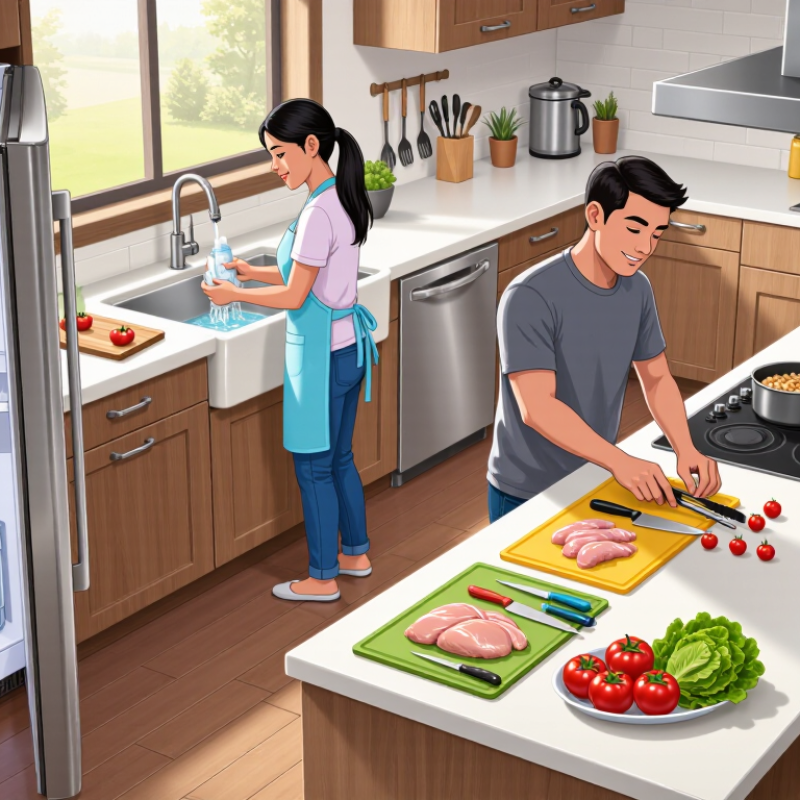
Cross-contamination is the transfer of harmful microorganisms from raw foods, hands, utensils, or surfaces to ready-to-eat foods. It may leave no smell, stain, or visible warning. A knife used on raw poultry can carry invisible residue onto salad. That simple transfer is why the topic matters. WHO estimates that contaminated food causes 600 million illnesses and 420,000 deaths worldwide each year (WHO, 2015). In the United States, CDC estimates include 48 million illnesses, 128,000 hospitalizations, and 3,000 deaths annually (CDC, 2011).
Children, older adults, pregnant people, and immunocompromised individuals face greater consequences. Symptoms may begin hours or days later, making the original mistake easy to miss. Food can look perfectly normal. The FDA Food Code 2022 identifies separation, handwashing, cleaning, and sanitizing as essential controls. During a busy shift, keep raw poultry below produce in the refrigerator. Use separate cutting boards when possible, and clean the counter after every raw-food task.
Wash hands with soap for at least 20 seconds before touching cooked food. Do not trust rinsing alone. Rinsing can spread droplets across the sink and nearby handles. A practical self-check is uncomfortable but useful: where did my raw-food knife rest? One missed handle can undo several careful steps. Perfect routines are unlikely. Consistent routines are safer.
| Prevention Area | What Cross-Contamination Means | Key Fact or Standard | Recommended Action | Public Source |
|---|---|---|---|---|
| Hand Hygiene | Germs can move from hands to food, utensils, equipment, or ready-to-eat meals. | Wash hands with soap and running water for at least 20 seconds. | Wash before preparing food and after handling raw meat, poultry, seafood, eggs, waste, or pets. | Centers for Disease Control and Prevention (CDC) |
| Separate Raw and Ready-to-Eat Foods | Raw animal foods may transfer harmful microorganisms to foods that will not be cooked. | Separate raw meat, poultry, seafood, and eggs from other foods during shopping, storage, and preparation. | Use separate plates, containers, and utensils; never place cooked food on a plate that held raw food unless it has been washed. | U.S. Department of Agriculture (USDA) |
| Refrigerator Storage | Leaks from raw foods can contaminate foods stored below or beside them. | Keep the refrigerator at 40°F (4°C) or below. | Store raw meat, poultry, and seafood in sealed containers on the lowest shelf. | U.S. Food and Drug Administration (FDA) |
| Temperature Danger Zone | Bacteria can multiply rapidly when perishable food remains at unsafe temperatures. | The danger zone is 40°F–140°F (4°C–60°C). | Keep cold food at 40°F (4°C) or below and hot food at 140°F (60°C) or above. | USDA |
| Time Control | The longer perishable food stays in the danger zone, the greater the opportunity for microbial growth. | Refrigerate perishable food within 2 hours, or within 1 hour when the temperature is above 90°F (32°C). | Divide large amounts into shallow containers to cool more quickly. | USDA |
| Safe Cooking Temperatures | Insufficient cooking may leave harmful microorganisms alive in food. | Poultry: 165°F (74°C); ground meats: 160°F (71°C); whole cuts of beef, pork, veal, and lamb: 145°F (63°C) with a 3-minute rest. | Measure the thickest part with a food thermometer and avoid relying on color alone. | USDA |
| Cleaning and Sanitizing | Microorganisms can remain on cutting boards, countertops, knives, handles, and other high-touch surfaces. | Cleaning removes food residue; sanitizing reduces microorganisms to a safer level. | Clean with detergent and water first, then use an appropriate food-contact surface sanitizer according to its label. | FDA Food Code |
| Cutting Boards and Utensils | A contaminated tool can transfer microorganisms directly to ready-to-eat food. | Raw-food equipment and ready-to-eat-food equipment should be kept separate or thoroughly cleaned between uses. | Use separate boards when possible and replace boards with deep grooves that cannot be effectively cleaned. | FDA |
| Washing Produce | Produce can become contaminated through soil, water, hands, utensils, or contact with raw foods. | Rinse fruits and vegetables under clean, running water before cutting or eating. | Do not wash produce with soap, detergent, or commercial produce cleaners. | FDA |
| Leftover Storage | Improperly stored leftovers can support microbial growth and contaminate nearby foods. | Most cooked leftovers should be used within 3–4 days when refrigerated at 40°F (4°C) or below. | Label storage dates, keep containers covered, and reheat leftovers to 165°F (74°C). | USDA |
Cross-contamination happens when harmful microorganisms move from raw foods, hands, tools, or surfaces. A knife used on raw poultry can contaminate salad. Food may still look and smell normal.
It often occurs on counters, cutting boards, refrigerator shelves, sinks, towels, and drawer handles. Shared serving spoons can also spread contamination. Small drips matter.
Keep raw meat, poultry, and seafood in sealed containers on the lowest shelf. This helps prevent drips from reaching uncovered food. Check the container edges for leaks.
Rinsing raw poultry can spread contaminated droplets around the sink. Those droplets may reach faucets, handles, or nearby dishes. Skip rinsing, then clean the sink carefully.
Wash hands with soap and running water for at least 20 seconds. Scrub fingertips, thumbs, between fingers, and around short nails. Rinse alone is not enough.
No. Gloves can carry contamination to phones, handles, towels, and ready-to-eat food. Change gloves after handling raw ingredients. Wash hands before putting on new gloves.
Cleaning removes food, grease, and visible residue. Sanitizing reduces remaining microorganisms after cleaning. Wash with detergent, rinse, apply suitable sanitizer, and follow its contact time.
Ask where the raw-food knife, gloves, and towel rested. Inspect faucet handles, refrigerator seals, and cutting-board edges. I sometimes reach for the nearest towel. That habit needs correction.
Probably not, especially during a busy meal preparation. Consistent separation, handwashing, and surface care are safer than rushed perfection. Pause and inspect one high-touch area. Mistakes still happen.
This guide explains what cross-contamination is, why it matters, and how harmful microorganisms can move between raw foods, cooked meals, hands, utensils, surfaces, and storage containers. It highlights common risk points in kitchens and shows how to separate contaminated and clean items by using dedicated tools, keeping raw ingredients away from ready-to-eat foods, and following a clear workflow. It also explains how to prevent cross-contamination during meal prep through careful planning and consistent handling habits.
Readers will learn practical steps for washing hands, cleaning surfaces, sanitizing equipment, and maintaining safe food storage conditions. The guide also covers labeling, temperature monitoring, timely refrigeration, and regular kitchen checks. By observing these practices, identifying weak points, and improving routines over time, households and food preparation teams can create a cleaner, safer, and more reliable working environment.

 ProChef Kitchen